
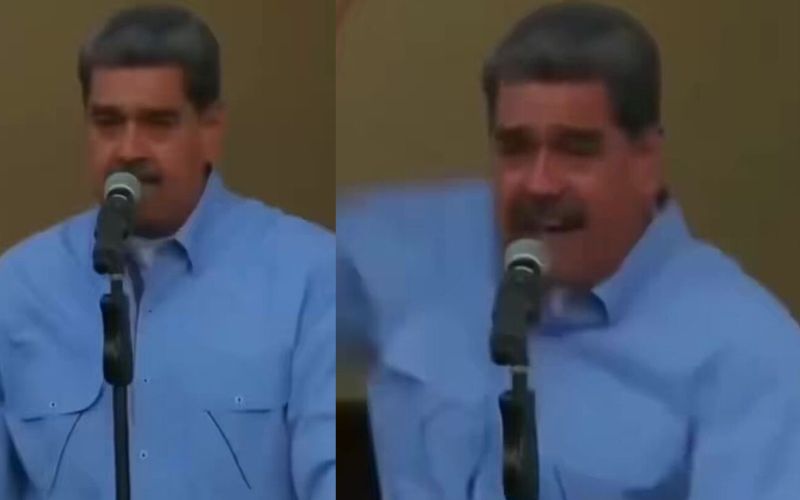
Venezuelans both within the country and abroad recently took to the streets to celebrate the significant political change following the capture of Nicolás Maduro, the country’s long-standing leader. These celebrations highlight the ongoing tumult of the Venezuelan crisis and the widespread desire for change among its citizens.
Large Gatherings in Venezuela and Abroad
Footage from the nation’s capital, Caracas, depicted thousands of citizens gathering in an open area shortly after news of Maduro’s capture broke. Aerial views showed sizable crowds, while nighttime visuals captured the sounds of jubilant citizens banging pots and pans from their balconies—a traditional form of protest in Venezuela. Reports identified scenes of people applauding and cheering as they removed images of Maduro, reflecting the local population’s response to the news.
Celebrations were not limited to Venezuela alone. Significant gatherings were recorded in various locations across South America and the United States. In Doral, Florida, a large crowd dressed in clothing adorned with both Venezuelan and American flags came together to express their joy over Maduro’s departure. Venezuelan Americans, many of whom have fled the authoritarian regime, joined in the festivities in various major cities across the U.S.
The Venezuelan Exodus and Its Impact
Since the political rise of Hugo Chávez in 1999, and the subsequent leadership of Maduro beginning in 2013, Venezuela has faced a mass exodus of its citizens. Reports estimate that approximately 7.9 million Venezuelans have left the country, driven away by severe economic collapse, hyperinflation, and shortages of essential goods. Initially, the outflow was gradual, with around 1.5 million citizens leaving between 1999 and 2014. However, this trend significantly accelerated from 2015 onward, with the number of Venezuelans living abroad increasing dramatically.
The United Nations has provided estimates indicating that approximately 2.8 million Venezuelan refugees currently reside in neighboring Colombia and about 1.7 million are in Peru. Many others have settled in various South American countries, with nearly one million Venezuelans believed to have made their way to the United States. This diaspora has formed a significant community that remains closely tied to the political situation back home.
Voices for Change and Future Leadership
In the wake of Maduro’s capture, voices of opposition leaders like María Corina Machado have emerged, emphasizing the importance of popular sovereignty in Venezuela. As a prominent opposition figure and recipient of the 2025 Nobel Peace Prize, Machado has called for the appointment of Edmundo González Urrutia as the new leader of Venezuela. Urrutia, who has been recognized as the country’s president-elect following a controversial election in 2014, responded by stressing the need for national reconstruction.
Urrutia remarked on the current moment in history, urging Venezuelans to prepare for a major effort toward restoring the nation. His call signals a potential shift in governance and a renewed focus on rebuilding the country in the aftermath of Maduro’s rule.
The celebrations following Maduro’s downfall underscore the widespread discontent with his government and the yearning for change among Venezuelan citizens. As communities both at home and in the diaspora rejoice in their newfound hope, the focus will likely shift towards building a better future for Venezuela. The international community will continue to observe the developments within the country closely, as the narrative of freedom and reconstruction begins to unfold.