
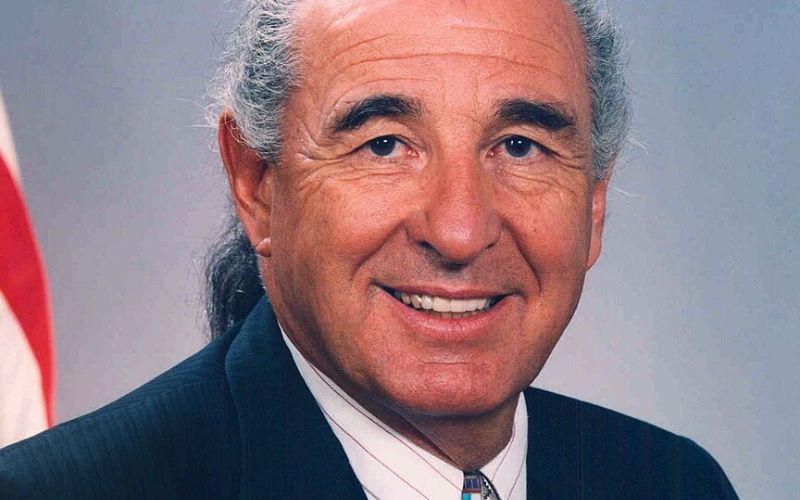
Former U.S. Senator Ben Nighthorse Campbell, a notable Colorado lawmaker, passed away on Tuesday at the age of 92. His family confirmed that Campbell died of natural causes while surrounded by his loved ones, including his wife, Linda, their children Shanan and Colin, and four grandchildren.
A Unique Political Career
Campbell was a prominent figure in the political landscape and is best remembered for his decision to switch from the Democratic Party to the Republican Party in 1995. This surprising move created a significant stir in Washington and elicited strong reactions from Democratic leaders. Campbell served in the U.S. Senate from 1993 until his retirement in 2005, which was primarily due to health concerns.
Before his Senate career, Campbell was active in both the U.S. House of Representatives and the Colorado House. He was known for his independent-minded approach to lawmaking and often displayed little tolerance for strict party lines.
Advocacy and Legacy
Campbell was recognized for his robust advocacy for Native American rights and issues. As a member of the Northern Cheyenne tribe, he was deeply connected to his heritage. He often highlighted the historical context of his ancestry, notably referencing past injustices faced by Native Americans. Among his achievements, he was instrumental in sponsoring legislation to upgrade the Great Sand Dunes National Monument in southern Colorado to national park status.
Beyond Native American issues, Campbell’s political stance included support for children’s rights, organized labor, and principles of fiscal conservatism. This platform made him difficult to categorize within the typical political spectrum.
Background and Personal Interests
Born on April 13, 1933, in Auburn, California, Campbell had a multifaceted career. He served in the Air Force during the Korean War before pursuing higher education, ultimately earning a bachelor’s degree from San Jose State University in 1957. He also attended Meiji University in Tokyo, Japan, from 1960 to 1964.
Campbell was a dedicated athlete and served as the captain of the U.S. judo team at the 1964 Olympics, where he also won a gold medal at the Pan American Games. His diverse career included roles as a deputy sheriff in Sacramento County, coaching the U.S. national judo team, and teaching high school classes. Additionally, he was an avid motorcycle enthusiast and cattle rancher, which led to his induction into the AMA Motorcycle Hall of Fame.
Continued Influence and Contributions
After leaving public office, Campbell founded Ben Nighthorse Consultants. His firm focused on federal policy issues, particularly those relating to Native American affairs and natural resources. He maintained an active role in designing and crafting American Indian jewelry, which earned him recognition beyond Colorado.
Reflecting on his party switch in 1995, Campbell stated that the Democratic Party’s rejection of a balanced-budget amendment motivated his decision. Nevertheless, he maintained that his core beliefs remained intact. He often emphasized that his voting record on labor issues did not change with his party affiliation. “It didn’t change me. I didn’t change my voting record,” he remarked in past interviews.
Campbell’s unique political identity combined social liberalism with fiscal conservatism, placing him at odds with both extremes of the political spectrum. He acknowledged the challenges of this positioning, stating that he often received criticisms from various political factions.
Community Remembrance
In response to his passing, figures such as Colorado State Senator John Hickenlooper and Governor Jared Polis expressed their condolences and paid tribute to Campbell’s lasting impact on the state and beyond. Governor Polis ordered flags to be flown at half-staff in honor of Campbell on the day of his service.
As a legislator, an advocate for Native American issues, and a master jeweler, Ben Nighthorse Campbell’s contributions will be remembered by many, leaving a rich legacy in the political realm and in his community.